
Humanitarian Intervention in Practice
A Comparative Study of Kosovo, East Timor, and Libya
Keywords:
humanitarian Intervention, coercive diplomacy, civilian protection, responsibility to protect (R2P), post–cold war conflictAbstract
This article examines the effectiveness of coercive diplomacy in humanitarian interventions in the post–Cold War international system. As intra-state conflicts increasingly involve systematic violence against civilian populations, the international community has turned to coercive strategies—such as air campaigns, no-fly zones, and peace enforcement missions—to compel actors to halt atrocities without engaging in full-scale war. However, the use of coercive diplomacy raises significant legal, political, and ethical debates regarding sovereignty, legitimacy, and selectivity in intervention decisions. Using a comparative case-study approach, this study analyzes three prominent humanitarian interventions: Kosovo (1999), East Timor (1999), and Libya (2011). Through qualitative process tracing supported by selected quantitative indicators, including civilian casualty trends, displacement patterns, and post-conflict stability measures, the research evaluates both immediate humanitarian outcomes and long-term political consequences. The findings suggest that coercive diplomacy can effectively compel short-term behavioral change and reduce immediate violence against civilians. However, its long-term success depends heavily on institutional factors, particularly multilateral legal authorization, credible enforcement capacity, and sustained post-conflict governance engagement. Cases where coercive intervention was integrated with long-term international administration and reconstruction efforts produced more stable outcomes, while interventions lacking robust post-conflict planning resulted in prolonged instability. The study concludes that coercive diplomacy is most effective when embedded within a broader multilateral framework linking civilian protection, legal legitimacy, and post-conflict state-building.
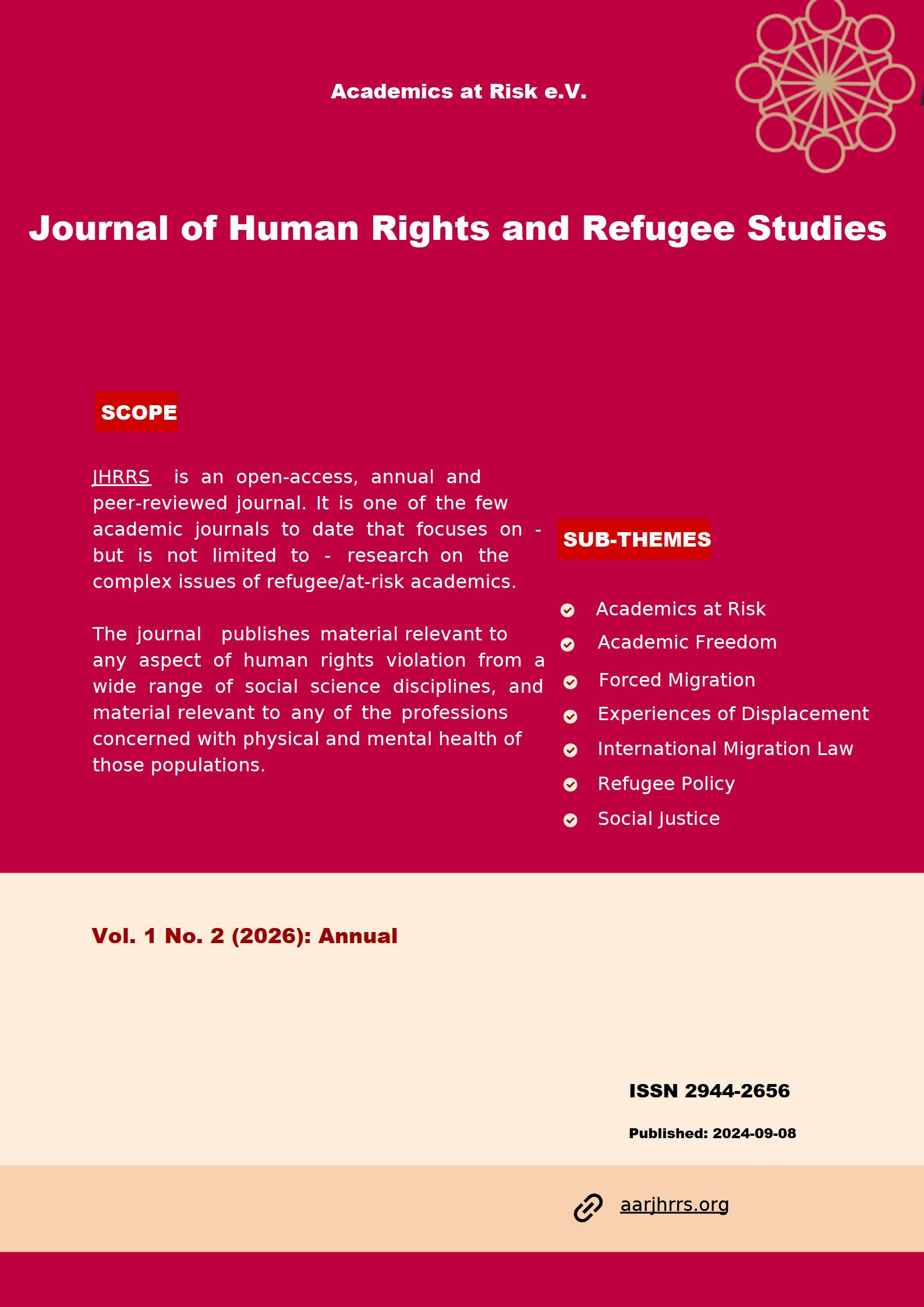
Downloads
Published
Issue
Section
License
The copyrights of the paper published by the Academic at Risk (AAR) Journal of Human Rights and Refugee Studies must be transferred to the journal.
Please fill out and sign this form after reading the Copyright Transfer Statement and upload it with your article via the article submission system.
Copyright Transfer Statement
The copyright of this paper is transferred to Academic at Risk (AAR) Journal of Human Rights and Refugee Studies if the paper is accepted for publication. The corresponding author, whose personal information and undersigned is below, transfers all copyrights of the paper to the Academic at Risk (AAR) Journal of Human Rights and Refugee Studies. The corresponding author declares and undertakes that the paper is original and that she/he is the author or one of the authors of the article. The corresponding author accepts and undertakes to provide permission notices from other copyright holders and materials whose original source is clearly stated when necessary. In addition, the corresponding author accepts and declares that she/he has the authority to perform and execute this task.
The corresponding author declares that:
1. This paper is/was not published in another journal, book, proceedings book, etc.,
2. Before the acceptance or rejection decision is done by the AAR Journal of Human Rights and Refugee Studies, it will not be submitted elsewhere,
3. Copyright permission is obtained for materials that require permission to be published, reproduced and published elsewhere.
By this way, authors transfer all and unlimited publication rights of the aforementioned paper to the Academic at Risk (AAR) Journal of Human Rights and Refugee Studies. The copyright transfer covers the exclusive right to reproduce and distribute the article, including reprints, translations, photographic reproductions, microform, electronic form (offline, online) or any other reproductions of similar nature.
The corresponding author signs and accepts responsibility for releasing this article on behalf of all co-authors (if exist). After submission of this form signed by the corresponding author, changes of authorship or in the order of the authors listed will not be accepted.
Best regards,


